In this month’s Gosforth Nature Reserve Journal, Christopher Wren, NHSN Naturalist, shares insights into the secret lives of predatory reedbed birds.
Predators of the Reedbeds
Predatory water birds on the trail cameras
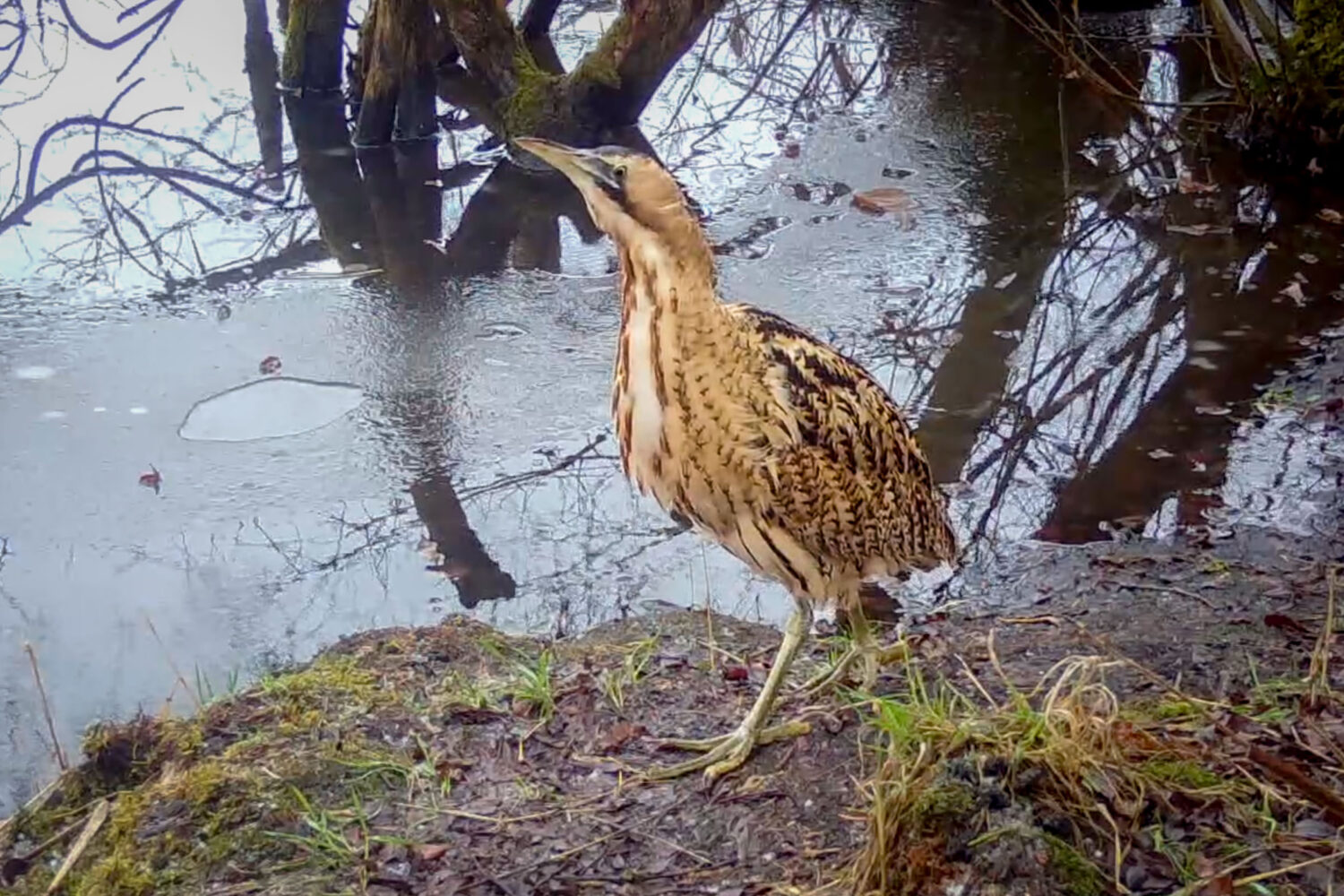
The trail cameras are usually set to capture pictures of a specific target, most often a mammal, but birds trigger many more recordings than mammals. Most of the mammals are rats and mice and most of the birds are wood pigeons and moorhens but sometimes it is something more interesting. If you have visited Gosforth Nature Reserve in the past few weeks you will probably have heard a bittern booming. Bitterns have been seen in the reserve in several recent winters but this is the first time one has stayed this long and boomed so consistently. The bittern is more easily heard than seen and usually stays deep in the reedbeds. On one occasion it did venture out in front of my trail camera.
Water rails are also more often heard than seen but they often dash across in front of the cameras. They are omnivorous and mostly eat invertebrates but this video shows one with a fish and another with a newt, with slow motion replays so we can see what is happening.
Herons are renowned for eating fish but will eat almost anything they can catch, including birds, mammals and amphibians. This one developed a taste for water shrews – it caught nine in six days in front of the cameras.
A recent video shows a heron with a perch. It was careful to swallow the perch head first, wary of the sharp spines in the dorsal fin.
And this heron caught a toad but soon dropped it when it realised it wasn’t a frog. The toad’s defence is to puff itself up and exude a foul-tasting toxic substance from its back. I don’t know how good a heron’s sense of taste is but it appeared to be trying to wash the taste away.
Cormorants are common sight fishing out on the lake but this is the first time one has come close enough to be caught on a trail camera.
Last but not least, a brief view of everyone’s favourite waterside bird, the Kingfisher.
You can get more updates on local wildlife from Christopher Wren on his own TrogTrogBlog. You can discover the wildlife of Gosforth Nature Reserve here.