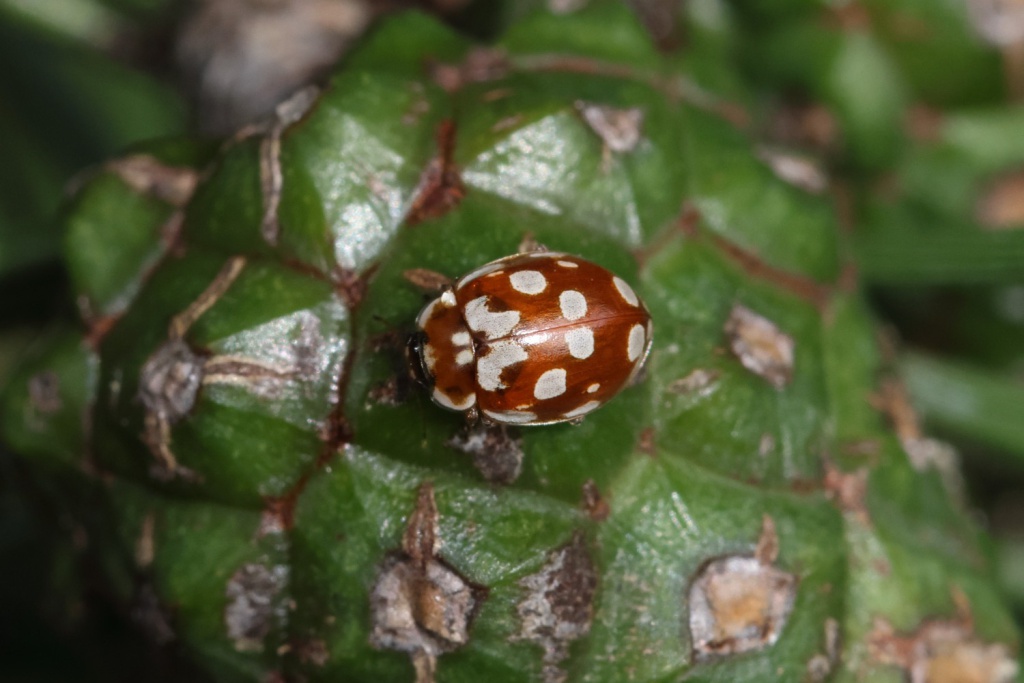
The Bristly and Ivy ladybird have both been recorded in North East England for the first time, and we would love your help finding what will arrive next.
Ladybirds don’t always look like ladybirds. Some are barely bigger than a pinhead, black, and covered in hairs. And two of them have just turned up in the North East for the first time.
The Bristly Ladybird and the Ivy Ladybird have both been recorded in our region this year, in Gosforth and Jesmond. They’re small, easy to miss, and a sign that our ladybird community is changing. Here we meet the two newcomers, then look at three more that could arrive next.
Newly Discovered Ladybirds
Bristly Ladybird
At first sight, you wouldn’t think it was a ladybird, only 2mm long, dark and hairy. The Bristly Ladybird is originally from Australia and was imported to Europe to control scale insects in horticulture.
How to identify it?
Looked at closely, it has blackish wing cases with a bronzy sheen and an orange-brown front end with orange legs. It is noticeably hairy.
Despite its Australian origins, Bristly Ladybird was first described in California by a local entomologist who thought it was native. In fact, it was introduced there in the 1890s from Australia.
Where to find it?
It was first reported in the UK in 1999 and is now found across the southern half of the country. It was recently recorded in the North East for the first time, being found in a mature oak tree in Gosforth.
It is known as an urban species, generally found in conifers, especially ornamental junipers and cypresses. So finding it in an oak tree was an extra surprise.
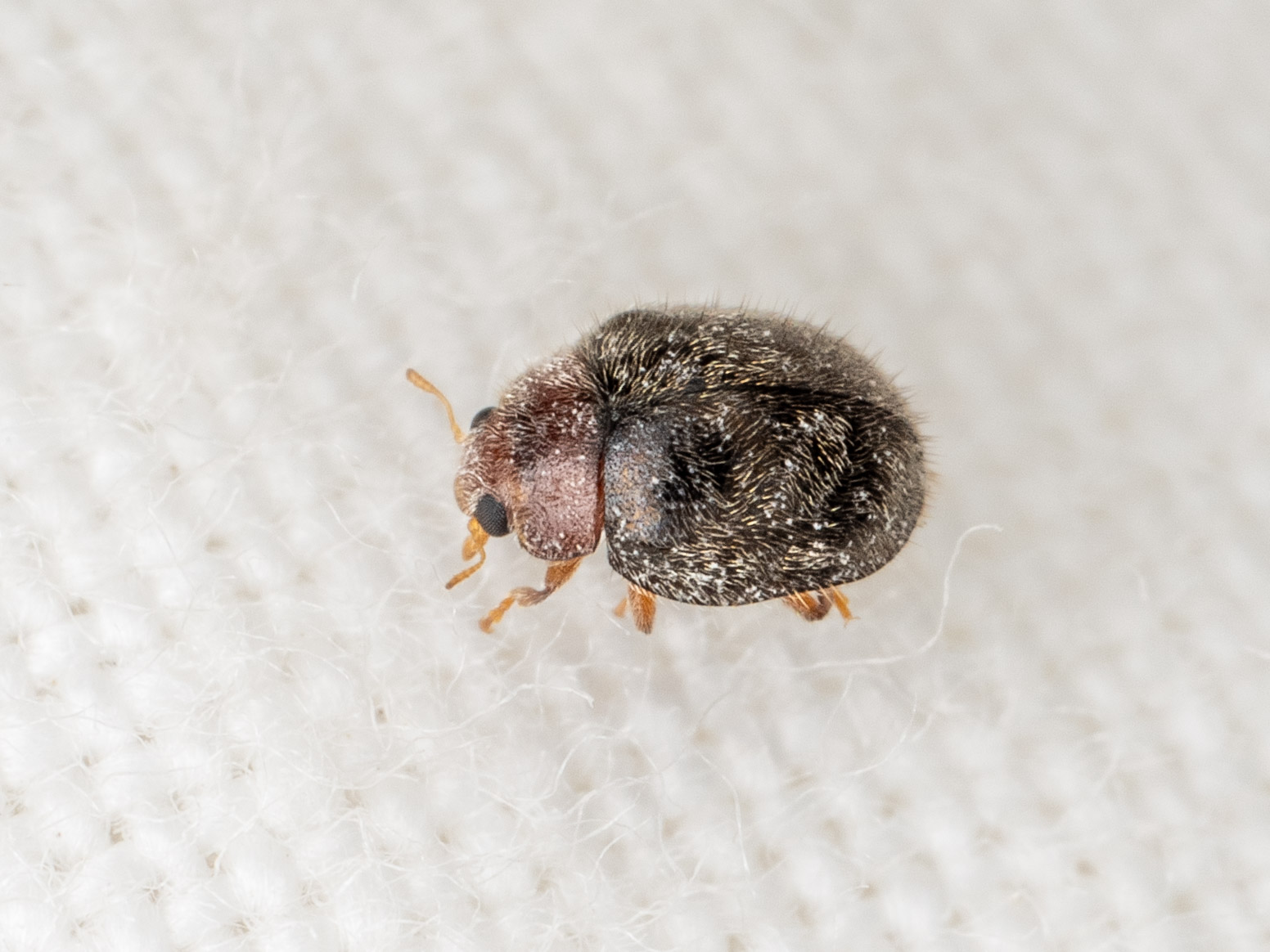
Bristly Ladybird © Christopher Wren
Ivy Ladybird
Small and rarely seen outside dense clusters of ivy, the Ivy Ladybird is easy to miss, which makes its arrival in the North East worth celebrating.
How to identify it?
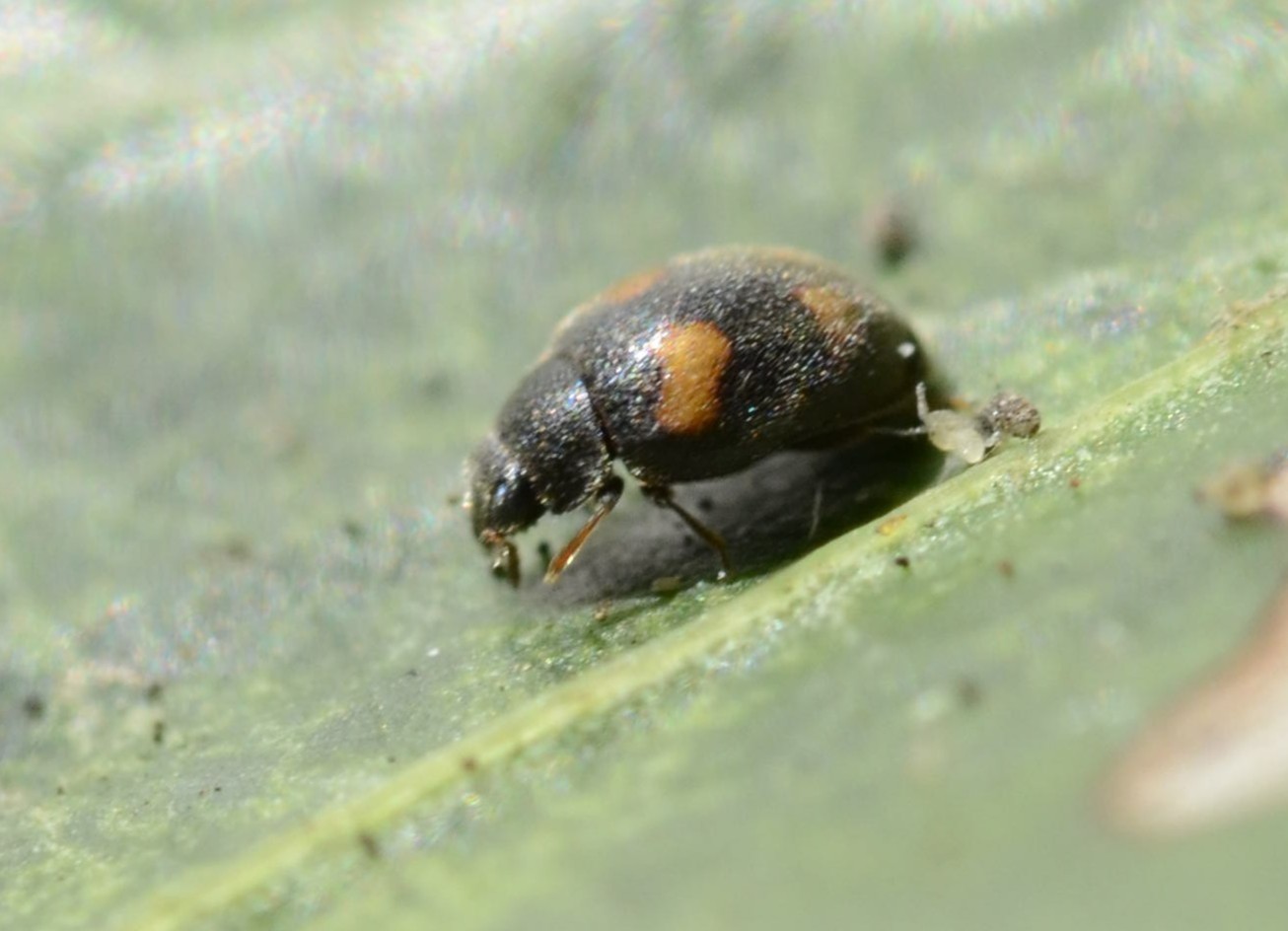
Measuring just 1.5 to 2mm, it is black and hairy, with two reddish-brown, kidney-shaped spots on each wing case. As its name suggests, this ladybird is most likely to be found on Ivy, where it hunts scale insects and shelters over winter.
Where to find it?
This species has been long established in southern Britain and was only recently discovered in Jesmond Old Cemetery, making it the first sighting north of Yorkshire.
To find one try checking south-facing patches of ivy, particularly on sunny days. Alternatively, try tapping ivy over a white sheet or net and seeing what falls out.
Ladybirds yet to be Discovered
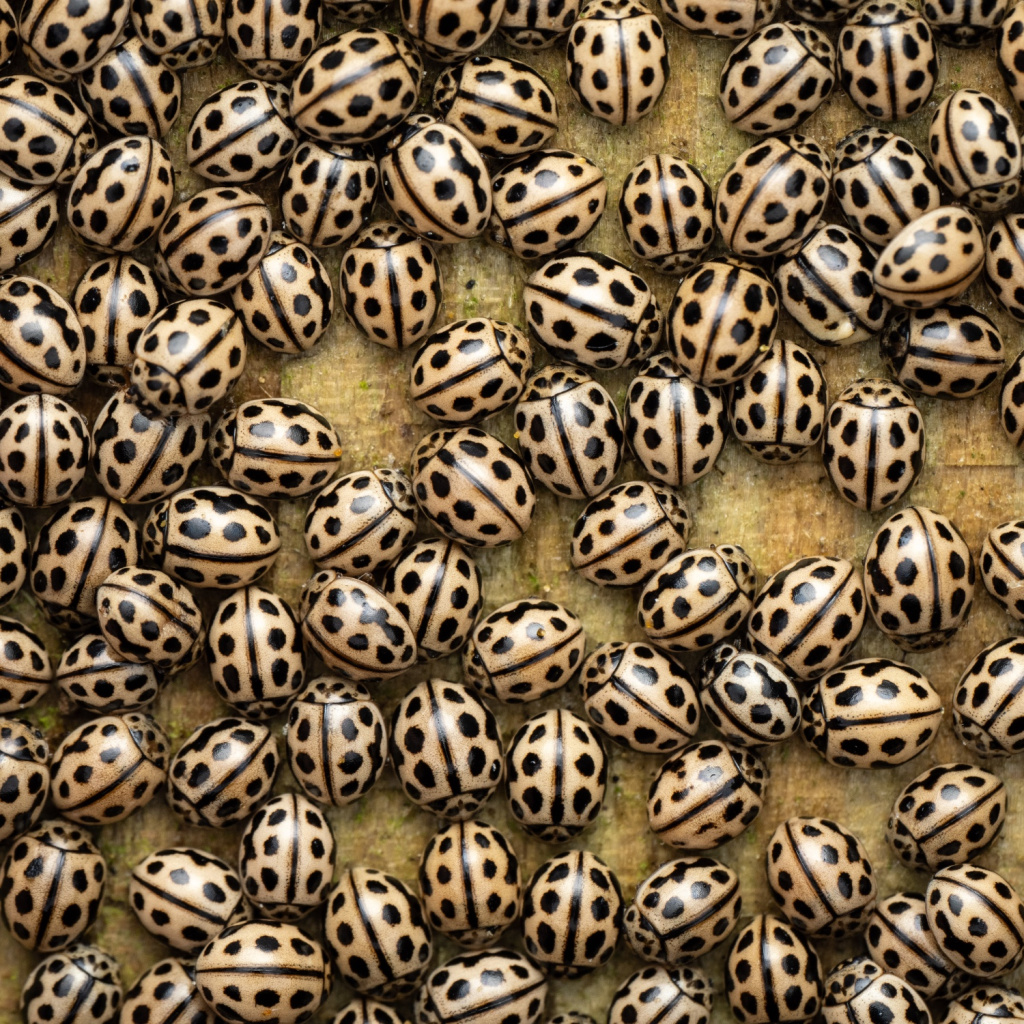
16-spot Ladybird
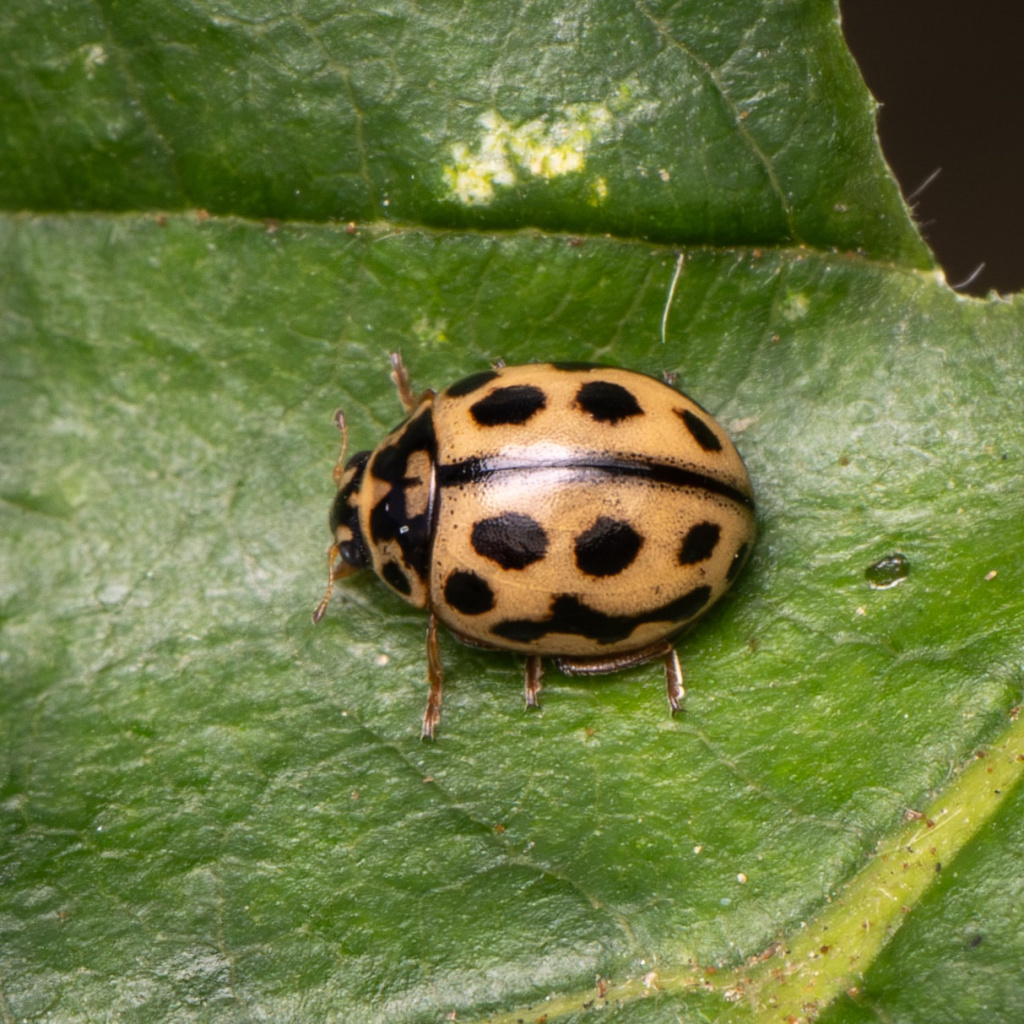
Could the 16-spot Ladybird be the next new arrival? This tiny ladybird is common across much of England, but it gets rarer the further north you go, with the furthest north record in England being Scarborough.
How to identify it?
Unlike our other newcomers, it’s pale rather than black and hairy. Look for a beige ladybird about 3 mm long, with black spots and a dark line running down the middle of its back. It feeds on pollen, nectar and fungi, and it’s easily overlooked in grassland.
Where to find it?
Your best chance of finding one is by sweeping or searching through long grass in summer, especially in meadows, grassy verges and rough ground. In winter, try fence posts, logs, stone walls and gorse, where it sometimes shelters in large groups.
Forestier’s Ladybird
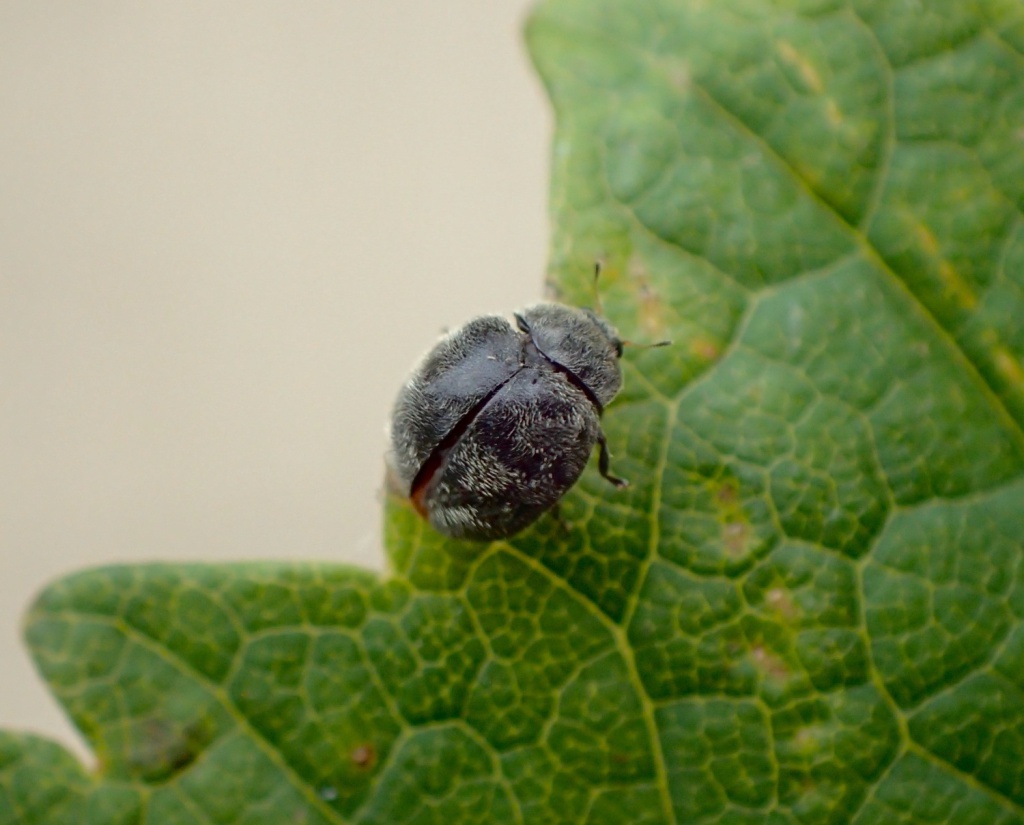
Could Forestier’s Ladybird be next? It’s another Australian species, introduced to Europe as a biocontrol agent and has since spread to the UK.
How to Identify it?
It is about 3mm long, black and hairy, with an orange tip to the abdomen
Where to find it?
It was first recorded in London in 2014 and has a UK distribution more confined to the east than the Bristly Ladybird. It hasn’t (yet) been recorded north of South Yorkshire.
Red-flanked Ladybird
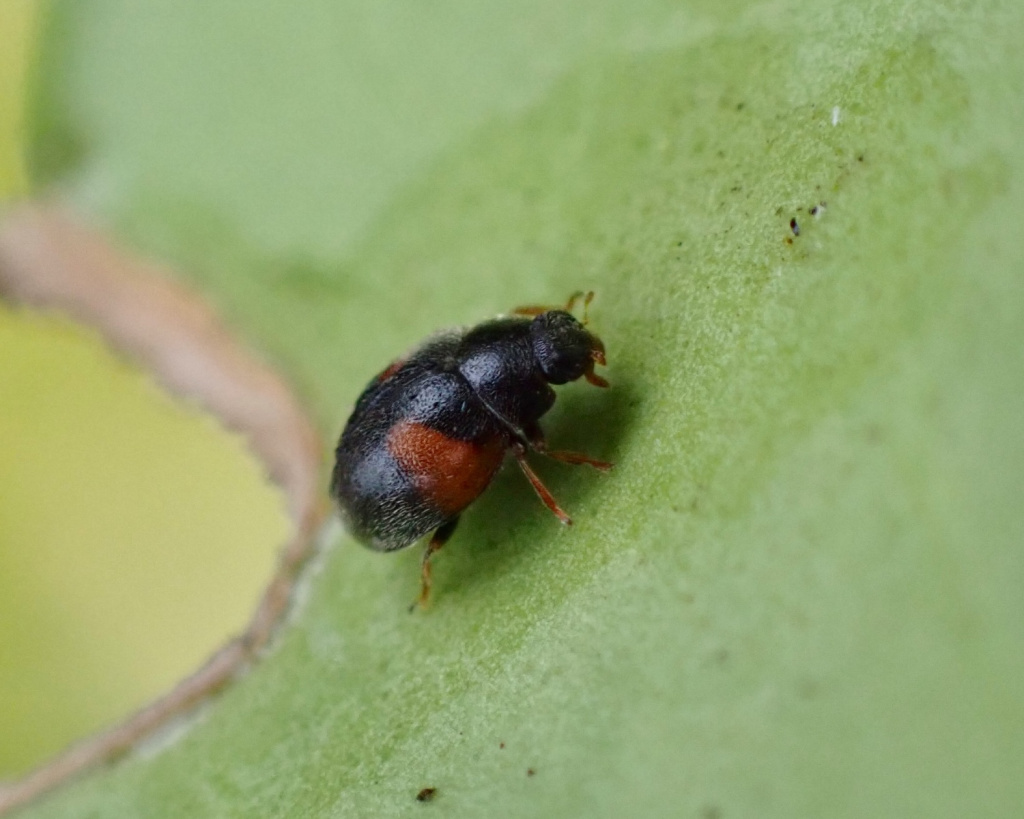
Could the Red-flanked Ladybird be the next to arrive? This very small ladybird is thought to be a recent colonist of Britain, and it’s slowly spreading north from its stronghold in south east England.
How to identify it?
Another tiny, black, hairy ladybird, this time with a red triangle on each wing case, giving this ladybird its name.
It feeds on mealybugs and scale insects, and it is often found in hedges, shrubs and garden bushes, sometimes on Ivy.
Where to find it?
Your best chance of finding one is by searching or tapping ornamental shrubs in parks, car parks and other public spaces, particularly Privet, Laurustinus, Firethorn and Ivy. Jesmond Old Cemetery is a promising site, as this ladybird is commonly associated with Ivy Ladybird.
What else will you discover?
These ladybirds are tiny, so a little patience helps. Try tapping ivy, hedges and ornamental shrubs over a white sheet or net and see what falls out. Car parks, parks and cemeteries are all worth a look.
Join the North East Ladybird Spot ›
You can help monitor and protect the North East’s ladybirds.
Shared with national experts, your sightings help inform conservation efforts for these important beetles.
Join the North East Ladybird Spot today to make a difference for these colourful insects. Taking part is fun, easy, and makes a real difference.