A chance find during a New Year Plant Hunt reveals a Mediterranean Nettle thriving in an urban crack, and highlights the power of citizen science in recording our ever changing flora.
Introduction
New Year’s Day is not traditionally associated with nettles. Yet there I was, on a crisp New Year’s morning in Jesmond, peering into a crack between wall and pavement during the New Year Plant Hunt, wondering why a very nettle-like plant looked just a little wrong.
The annual ‘hunt’, a national scheme run by the Botanical Society of Britain and Ireland and supported locally by NHSN, encourages participants to seek out plants still in flower at the turn of the year, helping to track how our flora responds to a changing climate. For me, as a member of both societies and a would-be botanist, it was an ideal way to start the year.
The spikey discovery
Towards the end of the enjoyable and relaxed New Year’s amble, I straggled behind the group getting caught up admiring a particularly lovely patch of Pellitory-of-the-Wall. Then I spotted, growing out of the crack between a wall and the pavement, rising above the pellitory, something that looked to me a cross between garlic mustard and a regular nettle. I ran some photos through Obsidentify and the results suggested Mediterranean Nettle (Urtica Membranacea). This was a new plant for me and excited, l hurried to show Ellie the photo and ID of my find. After noting the find, the walk continued through Sandyford and concluded upon arrival into Heaton Park where the group dispersed and we went on our ways.
But that wasn’t the end of it.
Later that afternoon I was checking the BSBI plant atlas which showed that this may be the first record for the county. After flurry of communication and a heroic rush by Ellie to save the frost sensitive specimen from the snow, identification was confirmed by BSBI County Recorder and NHSN Senior Naturalist, James Common, and expert botanists on social media. I confess, I did a little dance.
Upon celebrating our find as the county first, we were informed, via social media, of an older record from Berwick-upon-Tweed. This was submitted to the iNaturalist app in 2019. Plaudits go to Sarah Sells for the first whole county record. So now we know there are two visible records, one each in the North and South Northumberland vice counties. It will be interesting in the coming years to see how the distribution map develops.
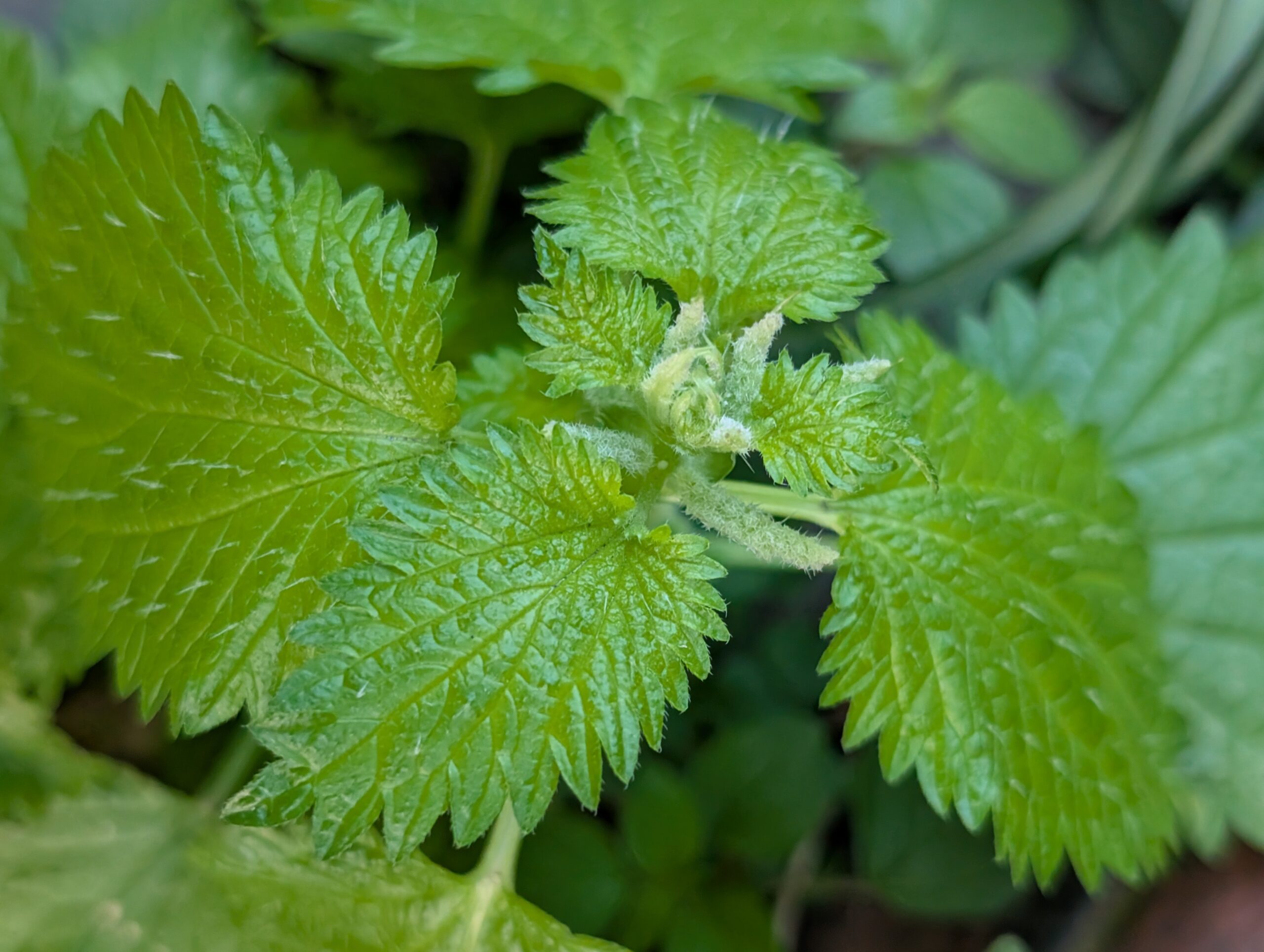
What to look for
That odd nettle, growing confidently from urban stonework, would turn out to be Urtica membranacea, the Mediterranean nettle, a species first recorded in the UK in 2006 in a yard behind some shops in Warwick. That original population was already well established, suggesting it had arrived some years earlier, with its continued survival and spread perhaps linked to milder winters.
Native to the Mediterranean basin, records now show distributions from Turkey to Portugal in southern Europe, Libya to Morocco in North Africa and populations extending into northern European countries France, Germany and the Netherlands. Its appearance on a Sandyford pavement was surprising, but perhaps no longer unexpected.
Enjoying urban environments, this annual upright herb reaches up, often from cracks in walls and pavements, to 40cm in height. Similar to native nettles in appearance; square stem, opposite leaf arrangement, cordate (heart-shaped) to ovate leaves with dentate (toothed) margins, and stinging hairs (trichomes). U. membranacea can be discerned from both Stinging Nettle (U. dioica) and Small Nettle (U. urens) by the fused stipules at the nodes.
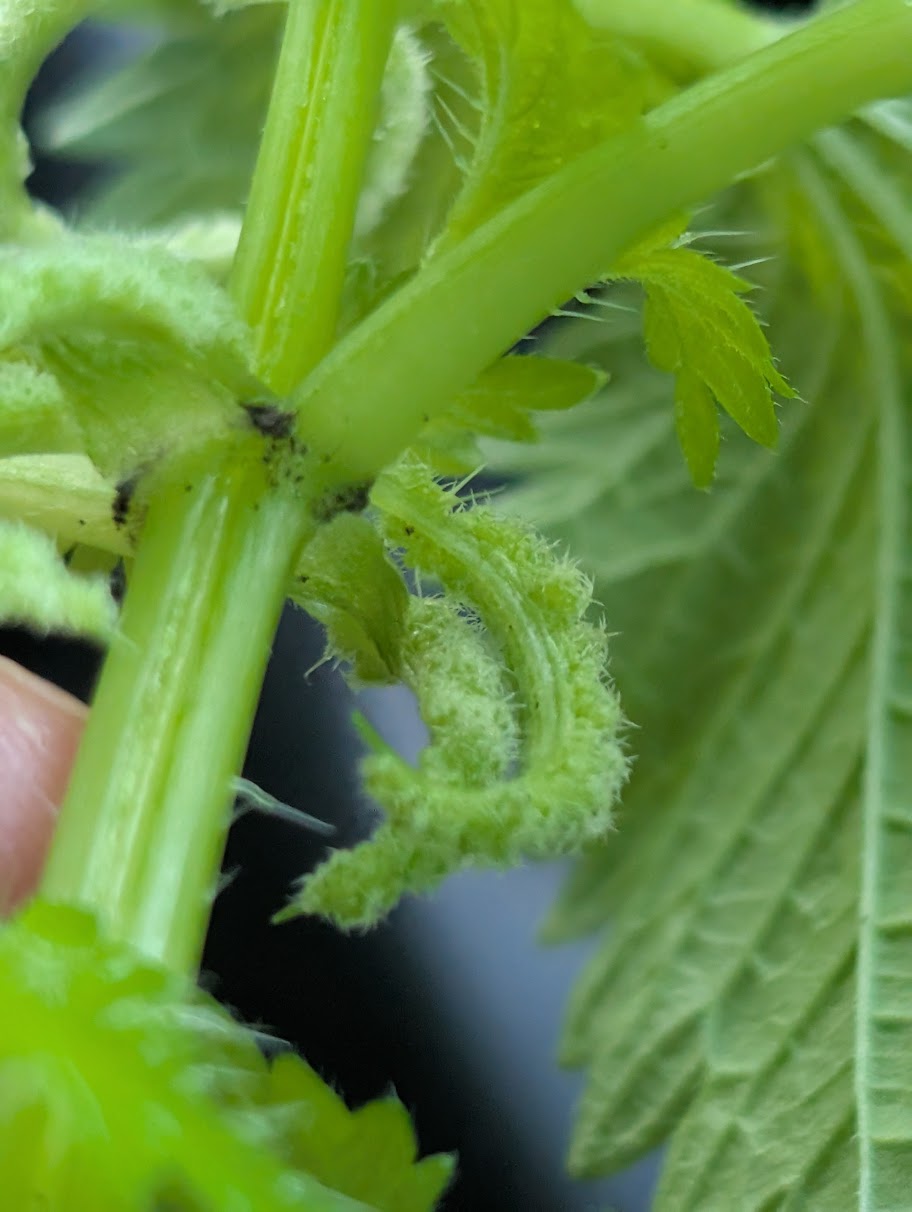
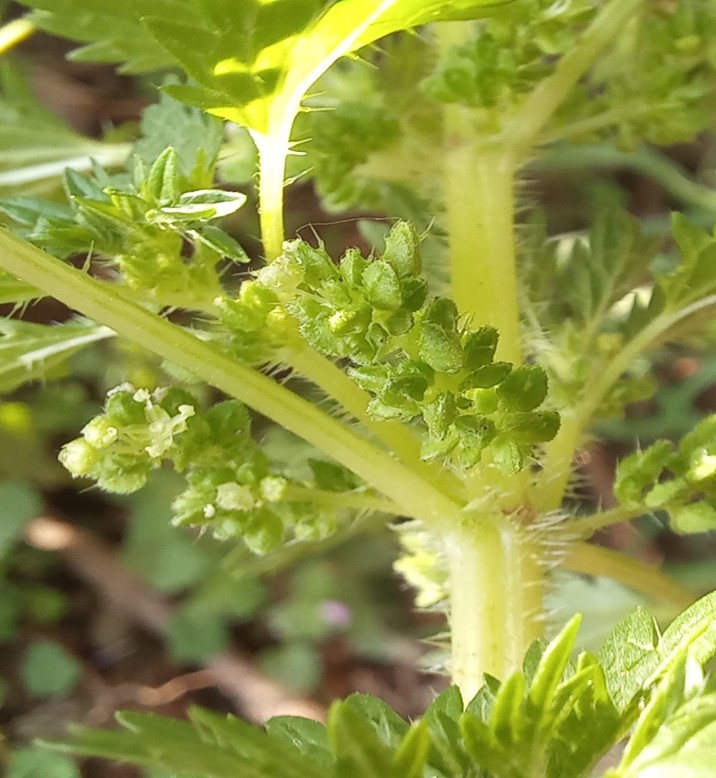
Citizen science and recording
Citizen science projects such as The New Year Plant Hunt are great ways for regular people with an enthusiasm for the environment to contribute to nature conservation by adding to the wider ecological record.
By engaging in science as regular citizens, we form an army of data collectors spanning vast areas, creating a web of records from where professionals rarely tread. By uploading our findings to the relevant databases our records can be utilised to inform academic studies, and, in turn, policy decisions. From a group of engaged individuals going out and recording what they find, through Universites and NGOs and into the House of Lords, our data can go a long way.
So get out there and discover what you can find, you never know, the next blog post about a newly arrived species could be written by you. Find out more about botanical recording in the North East here.